Turn Voice Notes into Tasks: A Guide for Busy Entrepreneurs
Founder's essay
5 Min
|

Copied


Quick Summary
There is a moment all founders know, the kind that arrives unannounced, usually between meetings, while walking the hall, or sitting in the back seat of a taxi. A thought flashes, something that could change the trajectory of your day, your next deliverable, or even your quarter.
You tell yourself you will remember it. Then you open another email, hop on another call, and by the time you sit down to work, it is gone.
That is the invisible cost of traditional productivity. It is not because founders are not disciplined. It is because leadership does not happen at a desk anymore. It happens in motion, in fragments, in conversations.
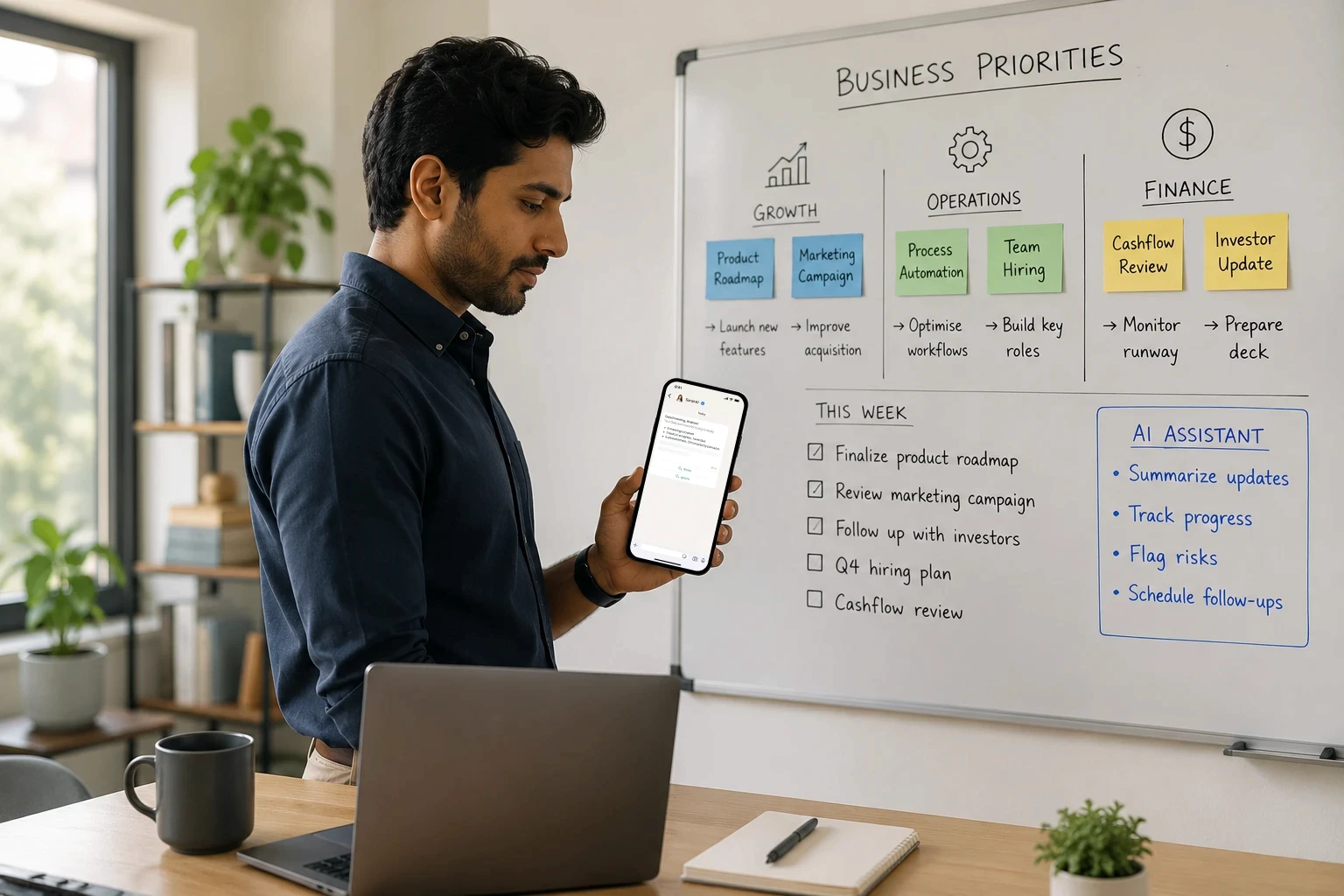
And that is exactly why turning voice notes into tasks is not just a nice feature. It is becoming foundational to modern entrepreneurial execution. SarahAI’s AI Executive Assistant are built to convert voice notes into structured tasks without interrupting how founders think and move.
Why Entrepreneurs Think in Motion - Not in Templates
Entrepreneurs do not think in templates. They think in moments.
A fuzzy idea becomes a decision between thoughts before it even lands in your planner. But most productivity systems assume you can and should stop what you are doing, open an app, type it out, categorise it, assign a due date manually, cross reference dependencies, as if your workday happens with space to breathe.
That assumption no longer holds true.
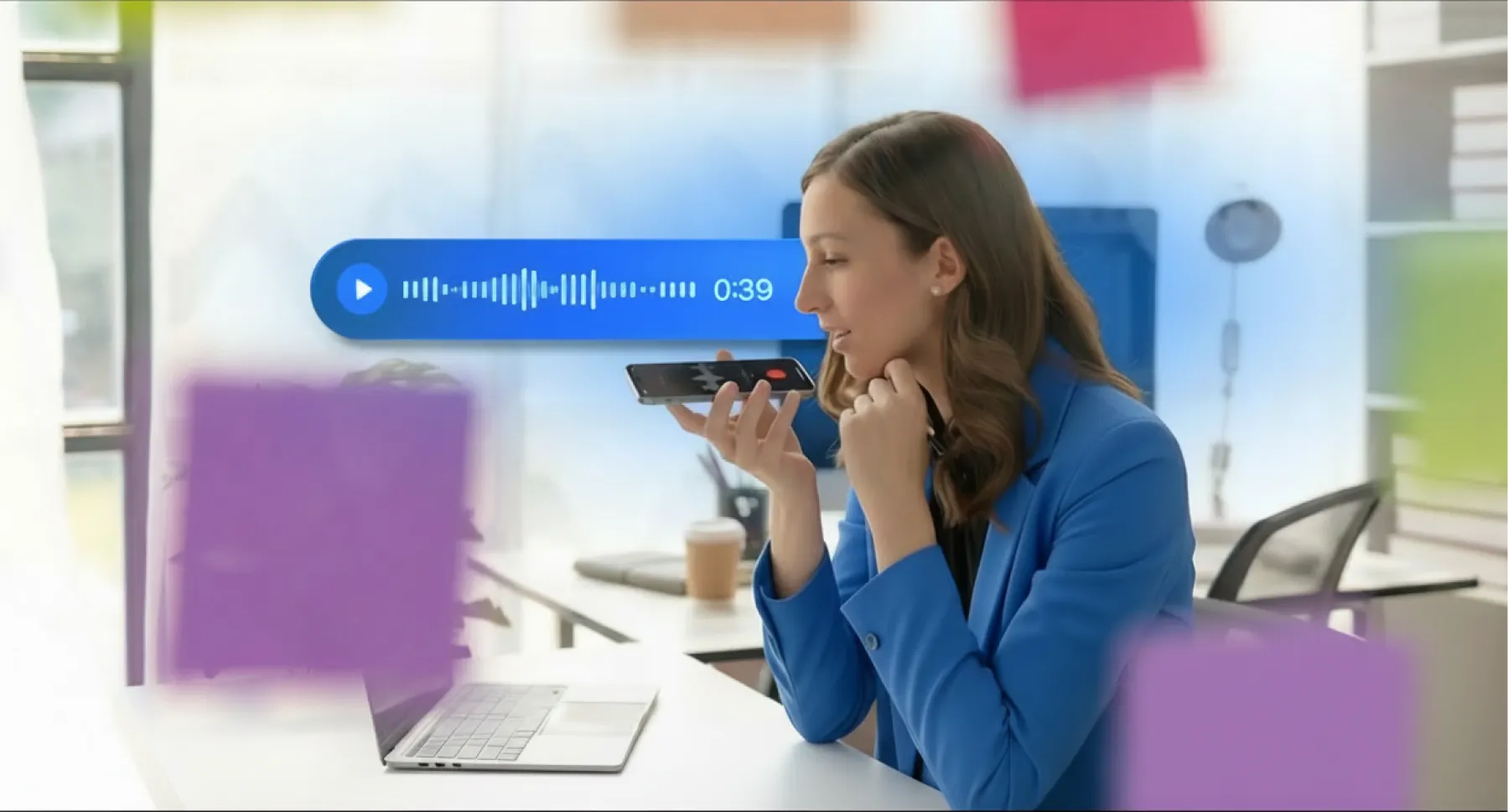
When you use a voice AI assistant that helps you convert voice notes to tasks automatically, the gap between thought and action shrinks dramatically. You do not have to interrupt your momentum to capture your thinking. The tool captures it for you. This reflects a broader voice-first leadership approach, where capturing decisions in motion becomes a structural advantage.

Voice-to-Task vs Typing: Capturing Intent at the Speed It Happens
There is a difference between typing and speaking.
Typing organises. Speaking reveals intent.
A raw thought like:
“Schedule time to talk to the design team about the packaging specs next Tuesday, and remind me to review the final draft Monday afternoon.”
contains context, priority, timing, and stakeholder information all at once. A good voice-to-task app picks up those signals, parses them, and translates them into a structured task. That is where AI is not just transcribing. It is interpreting and automating.
That is the promise of AI task automation in the real world. Voice notes to tasks that land where they actually get done - calendars, reminders, task lists, delegation queues - without you having to think about syntax, forms, or clicks.
Beneficial for creative agencies and marketing teams
Friction Is the Real Productivity Competitor
Every tap, every switch between apps, every moment spent formatting instead of executing is friction. And friction kills momentum.
Founders succeed because they remove friction, not because they add more structure. A voice AI assistant does not slow you down to fit your thinking into its frames. It adapts to how you already think, in speech, not in bullets.
When you turn voice notes into tasks instantly, the idea does not leak. Deadlines do not slip. Follow ups do not get lost in chat threads. Your momentum stays intact.
That is why leaders who embrace voice to task app experiences do not just feel more productive. They lead differently. They make decisions with confidence because every thought that matters finds a place in the system before it evaporates.
The Future of Entrepreneur Productivity Is Conversational
There is a wider shift happening in how we work. We used to punch keys to accomplish tasks. Now we talk to make them happen. More than a convenience, this is a new interface, one that preserves the speed of thought instead of forcing speed into a rigid structure.
A voice AI assistant that understands what you mean and seamlessly converts voice notes to tasks is not a luxury. It is infrastructure for the modern entrepreneur.
In a world where decisions are made in between everything else, between calls, on walks, mid ride, the real competitive advantage is not having more tools. It is reducing the distance between thinking and doing.
And that starts with speaking your intentions and watching them turn into actions instantly, reliably, and without distraction.