How WhatsApp Became the Operating System of SMEs
Founder's essay
5 Min
|

Copied


Quick Summary
Introduction
If you run an SME, you already know this: your business doesn’t live in a boardroom or on a nicely structured dashboard.
It lives on WhatsApp.
Not by strategy. Not by design. However, because every small business eventually gravitates towards whatever helps it move faster, and for most of us, that’s the green app we never close.
Clients ping you there. Suppliers send photos of stock. Teams drop voice notes between tasks. Invoices, approvals, after-hours decisions… all on WhatsApp.
It wasn’t built for business, but somewhere along the way, SMEs quietly turned it into one.
Why SMEs Adopted WhatsApp Long Before AI Showed Up
People often ask, “Why don’t SMEs use all these modern productivity tools?”
The answer is simple: SMEs don’t adopt tools. They adopt survival mechanisms.
Large companies have processes and structured systems. SMEs have whatever works today.
WhatsApp works because:
Everyone already knows how to use it.
It’s faster than email.
It cuts through formality.
It doesn’t require “onboarding”.
It meets people where they already are.
According to the World Bank, SMEs account for 90% of businesses globally and employ over half of the world’s workforce. They don’t have the luxury of multi-tool tech stacks or clean, centralised data. They run on instinct, hustle, and speed.
WhatsApp has become the operating system of SMEs because it matches their reality, which is messy, immediate, and human. Marketing and creative agencies running operations on WhatsApp

WhatsApp Solved the Chaos, But Also Created Its Own
Here’s the contradiction nobody talks about:
WhatsApp makes SMEs fast, but it also makes them forgetful.
You reply to a client while in a checkout line. You approve a design while boarding a flight. You confirm a deadline in a voice note between meetings. Voice as the natural next step for WhatsApp-first businesses
And then… it disappears into the chat history.
This is the paradox: WhatsApp is the most efficient place to run your business, but the least efficient place to keep track of it.
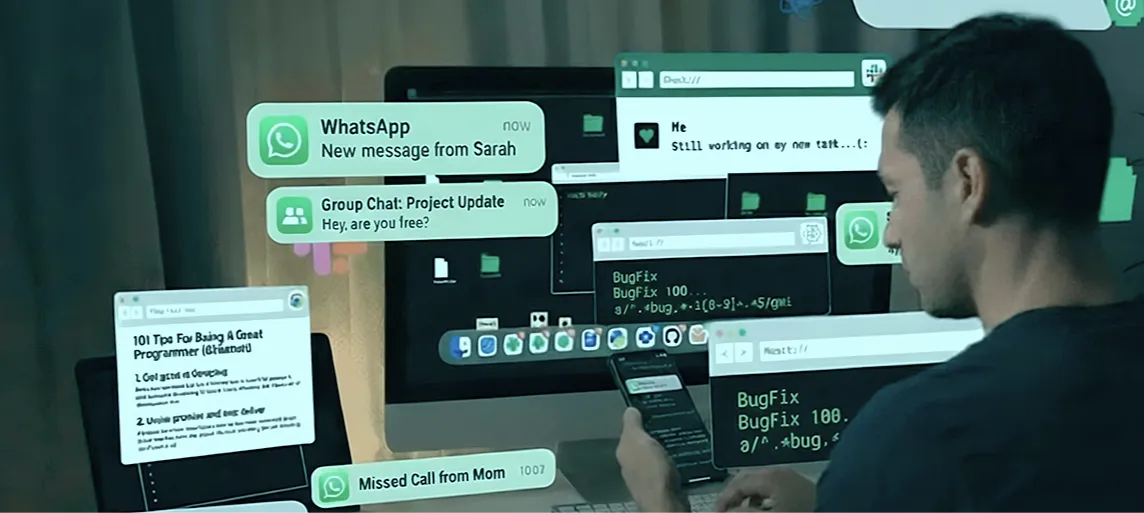
Tasks hide inside conversations, follow-ups drown under GIFs, decisions get lost between “seen” and “typing…”.
And yet SMEs continue to run millions of dollars of business on it every day. Because speed matters more than structure, until the lack of structure starts costing you speed.
Why This Behaviour Matters for the Next Decade of SME Tech
The next wave of AI adoption won’t be led by enterprises.
It will be led by SMEs, but only if AI meets them where they already work.
Not in dashboards.
Not in new apps.
Not in tools that require training, documentation, or process redesign.
It has to meet them on WhatsApp, the place where decisions actually happen. Where work actually moves, and where chaos actually lives.
This is about building an AI layer on top of how SMEs already behave. Because if WhatsApp is the unofficial OS of SMEs, then the future of SME productivity is not replacing it; it is upgrading it.
Where This Leaves Us as Builders
As founders building for emerging markets, we have to rethink our assumptions.
SMEs don’t need more platforms; they need less friction.
They don’t need complex automation; they need simple clarity.
They don’t necessarily need dashboards with insights; they need someone or something to help them not drop the ball when everything hits at once.
WhatsApp isn’t just a chat app; it’s a mirror of how SMEs think, operate, and survive: fast, fluid, chaotic, human.
If we really want to support SMEs, we shouldn’t ask them to change their behaviour. We should build technology that respects it.
And that’s the path forward.
Ready to Upgrade the WhatsApp OS?
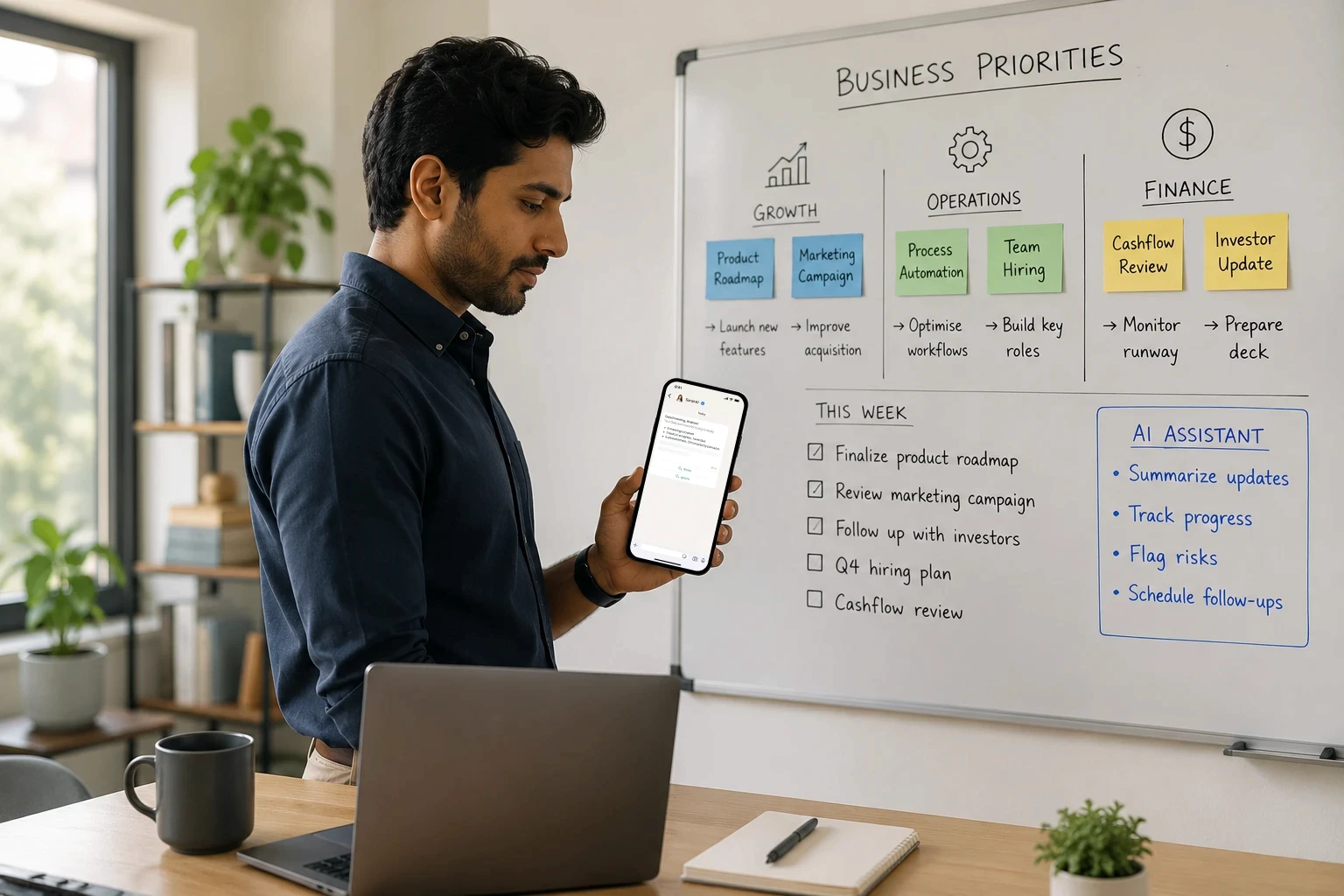
We built SarahAI on the belief that SMEs shouldn't have to change their behavior to adopt AI. If WhatsApp is the operating system where your decisions happen, then SarahAI is the layer that upgrades it, turning chaos into clarity.
We help you manage tasks, track deadlines, and get meeting summaries all through simple voice or text messages on WhatsApp. No new dashboards. Just simple clarity for complex business.
Ready to stop dropping the ball?
Try SarahAI Today