Voice Is the Next Frontier: Why Talking to Your Assistant Beats Typing
Founder's essay
5 Min
|

Copied


Quick Summary
For years, productivity software has assumed one thing: that work happens when you sit down, open a laptop, and type.
That assumption has never really held true for SMEs. And it’s becoming even less true now.
Because real work doesn’t happen neatly between meetings or inside perfectly organised tools. It happens while you’re moving. While you’re multitasking. While you’re reacting to whatever just broke, changed, or escalated.
That’s why voice isn’t a “nice-to-have” anymore, it’s the next frontier of productivity.
Typing assumes focus. SMEs rarely have it.
If you run or operate inside an SME, your day is fragmented by design.
You’re switching contexts constantly:
replying to a client
approving something for your team
remembering to follow up
jumping into another conversation
getting pulled into something urgent
Typing asks for stillness while voice works with motion.
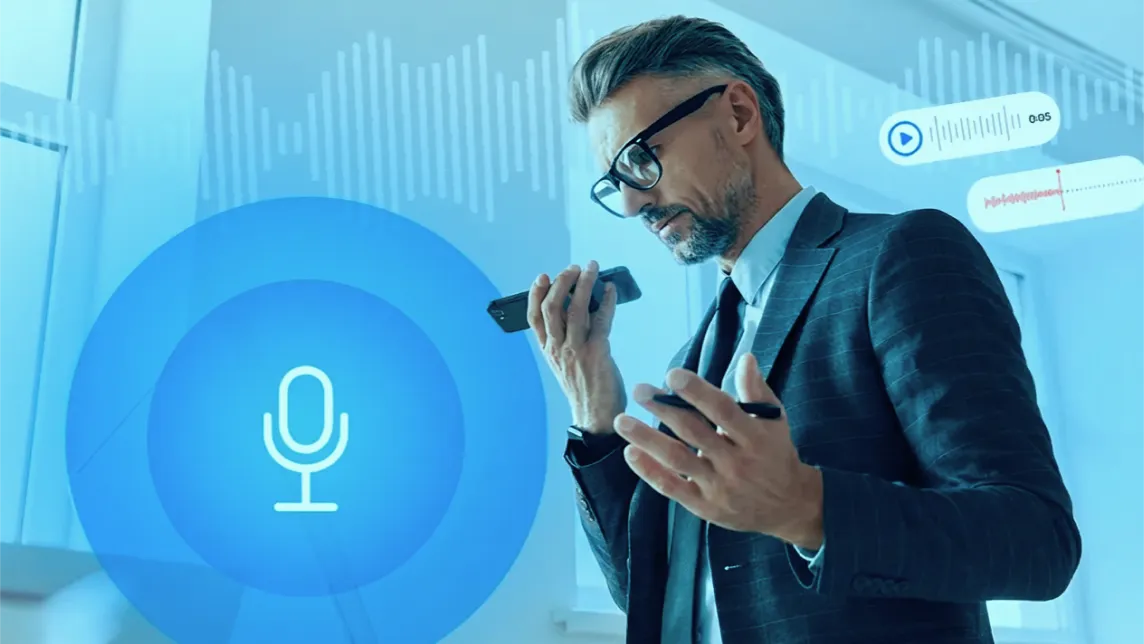
You can leave a voice note while walking between meetings. You can speak a reminder while driving. You can capture a thought before it disappears under the next interruption.
For SMEs, productivity isn’t about perfect inputs. It’s about capturing intent before it’s lost.
Voice does that better than text ever could.
Why voice productivity fits how SMEs already work?
SMEs adopted voice because it was practical. Voice notes are already everywhere:
in WhatsApp chats, WhatsApp is the primary business communication layer
in team updates
in quick instructions
in “I’ll explain this faster if I say it” moments
Voice became the default because:
it’s faster than typing
it requires less cognitive load
it works when your hands are busy
it matches how people actually think
This is especially true in markets where work is mobile-first and conversational by nature.
Voice doesn’t change SME behaviour, it aligns with it.
Voice AI isn’t about talking more, it’s about losing less
Here’s the real problem SMEs face:
Important things are said, but not captured.
A task is mentioned in a voice note. A follow-up is agreed verbally. A decision is made in passing. Then it vanishes.
Not because people don’t care, but because memory doesn’t scale.
This is where voice AI becomes meaningful.
Not as a flashy interface, but as a bridge between spoken intent and real execution.
When voice can be understood, summarised, and turned into something actionable, SMEs stop relying on recall and start relying on systems.
That’s when voice stops being “communication” and becomes voice productivity.
Learn more about the voice-first leadership principles

Why voice assistants for SMEs need to be different?
Most voice assistants were built for consumers or enterprises.
They assume:
clean commands
quiet environments
structured workflows
clear intent
SMEs are none of those things.
Voice assistants for SMEs need to:
understand messy, half-formed instructions
work inside existing tools, not separate ones
handle overlap between work and life
support execution, not just answers
They don’t need to sound smart, they need to be useful.
The best voice AI for SMEs won’t feel futuristic, it will feel invisible.
The shift we’re seeing as builders
As founders building for SMEs, this changes how we think about AI entirely.
The future isn’t:
more dashboards
more typing
more structured input
It’s fewer barriers between thinking and doing.
Voice removes friction.
AI adds structure.
Together, they reduce the mental load that slows small businesses down.
This is about helping founders and teams not drop the ball when everything hits at once.
Why we believe voice is foundational, not optional?
At SarahAI, we see voice as a starting point, not an add-on.
Because SMEs don’t need to be trained to use voice, they already do. They just need technology that respects that reality.
Voice AI, when built properly, doesn’t ask SMEs to slow down, type more, or organise better. It meets them where they are, mid-chaos, mid-sentence, mid-day.
And that’s why we believe: talking to your assistant will always beat typing, especially when work refuses to slow down.