Beyond Automation: Why AI Assistants Are About Decisions, Not Just Tasks
Founder's essay
6 Min
|

Copied


Quick Summary
Ai Assistants for SMEs
For the last decade, productivity software has obsessed over one thing: tasks.
Create tasks. Assign tasks. Track tasks. Complete tasks. And on paper, that sounds like progress.
If you’ve ever run an SME, you know the real problem was never doing tasks.
It was what actually mattered when everything arrived at once.That’s the gap most automation tools miss.
They optimise execution while in reality, SMEs struggle with decision-making under pressure. And that’s where AI assistants need to evolve.
SMEs Don’t Lack Tools. They Lack Clarity
Most SMEs already have more tools than they want:
Calendars
Project boards
Chat apps
Email
CRMs
Docs
What they don’t have is a clean moment to think because decisions for SMEs don’t happen in isolation. They happen:
mid-conversation
between meetings
inside chats
while switching contexts
while reacting to urgency
A calendar can tell you when something is happening. A task manager can tell you what needs to be done. But neither helps you answer the harder questions:
What should I prioritise right now?
What can wait?
What needs follow-up?
What did we decide but never formalised?
Therein, this is not just a task problem; it’s also a decision problem. This is especially true in fast-moving environments like retail and e-commerce, where decisions stack up across sales, inventory, customer messages, and follow-ups, exactly where an AI Executive Assistant for retail-e-commerce teams becomes critical.

Why Automation Is An Incomplete Promise?
Automation assumes clarity already exists.
It assumes:
the task is clearly defined
the deadline is known
the owner is obvious
the priority is agreed
SMEs rarely work like that, most instructions start messy:
“Let’s do this next week.”
“Remind me about this later.”
“We should probably follow up.”
“I’ll get back to this.”
Automation struggles here because it expects structure upfront. AI assistants, when built properly, don’t. They sit between intent and action. They don’t just execute instructions; they help shape them.
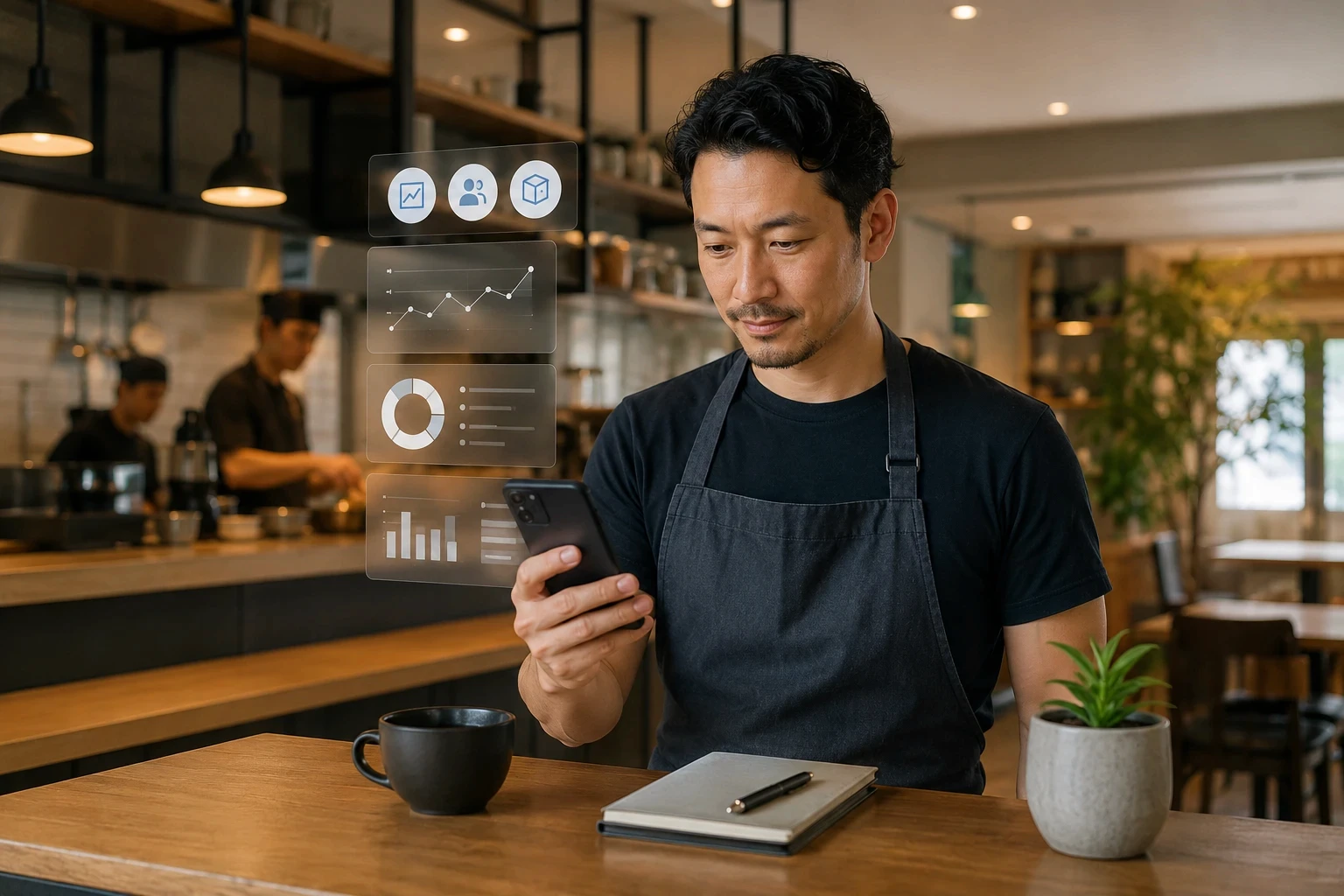
That’s the shift. In hospitality and F&B, decisions are made mid-shift, mid-conversation, and under pressure, which is why AI decision support for hospitality teams matters far more than rigid task automation.
AI Decision-Making is about reducing cognitive load
Good AI assistants aren’t about doing more work for you; they’re about reducing the mental tax of running a business.
The constant remembering, the mental juggling, the background anxiety of “I hope I didn’t miss something.”
When AI can:
extract action items from messages
summarise what matters from noise
surface pending decisions
remind you why something matters, not just that it exists
It stops being a task machine and takes the role of a decision partner. This is where AI decision-making actually creates value for SMEs - not by replacing judgment, but by protecting it.
Why this matters for SME strategy
SMEs don’t make fewer decisions than large companies.
They make more with less time, less data, and fewer buffers.
Every missed follow-up costs trust, every delayed decision compounds stress, and every forgotten commitment slows momentum.
That’s why SME strategy isn’t about perfect planning; it’s about staying responsive without burning out.
AI assistants that only automate tasks help at the surface.
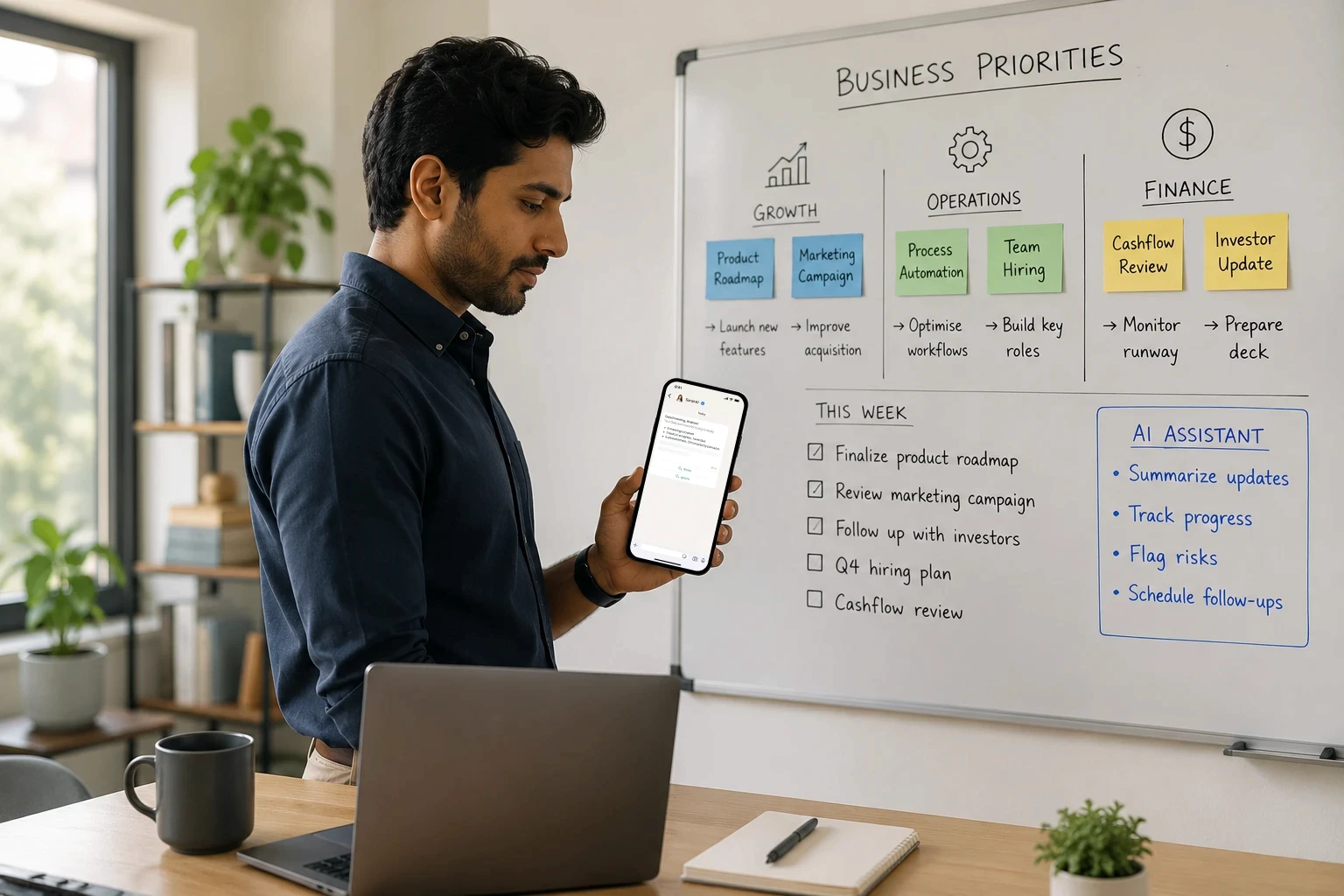
AI assistants that support decision-making change how SMEs operate. How CEOs are navigating AI-driven change
They help founders and teams:
see what’s slipping
recognise patterns
focus on what’s urgent and important
move forward with confidence instead of reaction
That’s a strategic advantage, not a productivity hack.
In project-driven industries like construction and real estate, where context shifts constantly across stakeholders and timelines, an AI Executive Assistant for real estate helps maintain clarity when things move fast.
What the best AI assistants for SMEs should actually do
The best AI assistants won’t feel like tools.
They’ll feel like someone quietly holding the threads together.
They’ll:
work inside existing workflows, not replace them
understand half-formed instructions
connect conversations to outcomes
help SMEs decide, not just execute
At SarahAI we have enterprise-grade security and data privacy
Where This Leaves Us as Builders
As founders building AI assistants, the challenge isn’t making them smarter.
It’s making them useful in real conditions.
Messy inputs.
Incomplete information.
Constant interruptions.
Blurred lines between work and life.
If AI assistants are going to matter to SMEs, they have to respect this reality.
Beyond automation is where the real work begins.
Because in the end, SMEs don’t win by completing more tasks; they win by making better decisions consistently, under pressure, when it counts. And that’s the future AI assistants should be built for. This builds on our earlier thinking around AI for small businesses, where the focus is on reducing mental load, not adding more tools or complexity.
That’s the future AI assistants should be built for.
SarahAI’s AI Executive Assistant are built to support clarity and decision-making in the middle of real, messy workdays.